


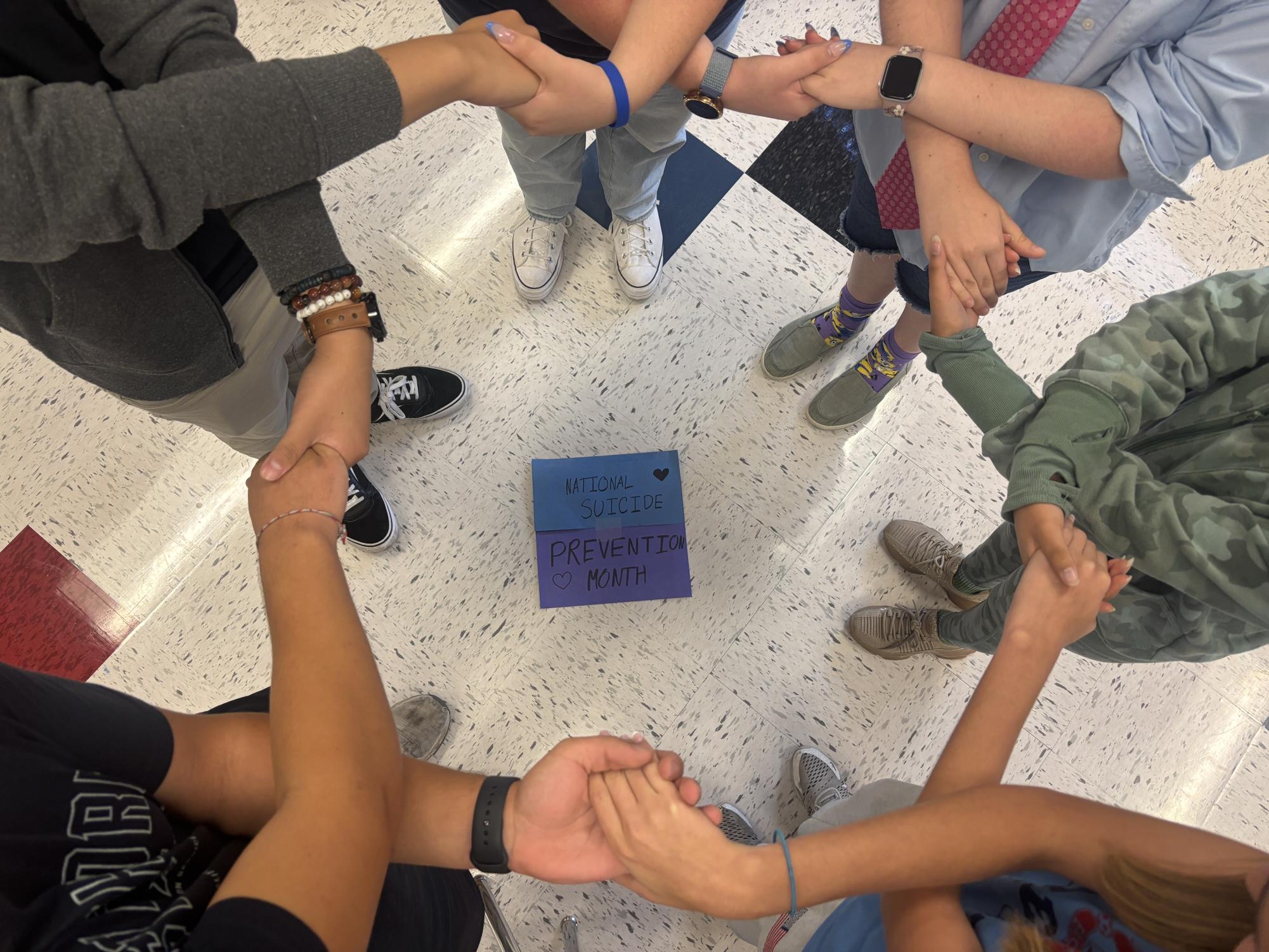

We as humans have incredibly complex minds, and with that complexity can come challenges—anxiety, depression, eating disorders, self-harm, and in the worst cases, suicide. These struggles are the reason we recognize awareness dates such as May’s Mental Health Awareness Month and September’s Suicide Prevention Month.
Mental health is a layered subject in psychology, influenced by both nature (your genetics and inheritance) and nurture (how you were raised, your environment and society). Your mental well-being can depend on the environment you grow up in, the society around you, the way you were raised, and even the genes you inherit.
“Genetics plays a role, your environment plays a role, what you know—all those things can affect how you view the world,” AP Psychology teacher Matt Barker said.
Research supports this. According to Stanford Medicine, about 40–50% of the risk for depression is linked to genetics. This doesn’t mean someone will definitely struggle with depression, but it shows that inherited traits can influence how much stress or hardship a person can handle before experiencing a depressive episode.
“Mental health has affected me a lot. My family struggles with it, my mom struggles with it, and it’s definitely impacted my life,” a sophomore shared, who preferred to remain anonymous.
Still, genetics are only part of the story. The environment and society people are exposed to play an equally important role. A strong support system, for example, can make all the difference. Knowing you aren’t truly alone, even when your emotional journey feels isolating, can provide strength.
“Everyone is their own individual, and they’re gonna deal with it on their own terms,” psychology teacher Jacob Cole said.
While mental health challenges can be painful, they can also shape resilience. Some students find strength and connection through their struggles.
“I was never happy with how I was, healthwise. It was just an obstacle, but now I see it as something I’ve built my character off of,” Peyton Bemis (9) said.
Even with decades of study, the human mind is still largely unknown. Neuroscientists understand the physical structure of the brain, but the conscious mind (the part that experiences thoughts and feelings) remains a mystery.
“Psychology is still very much in its infancy, and there’s a lot of questions we can’t answer,” Barker said.
What is clear, though, is that mental health is just as vital as physical health. Awareness months remind us to talk openly, reduce stigma, and support those who struggle. Whether through genetics, environment, or personal battles, mental health affects everyone—and building understanding is the first step toward healing.
