


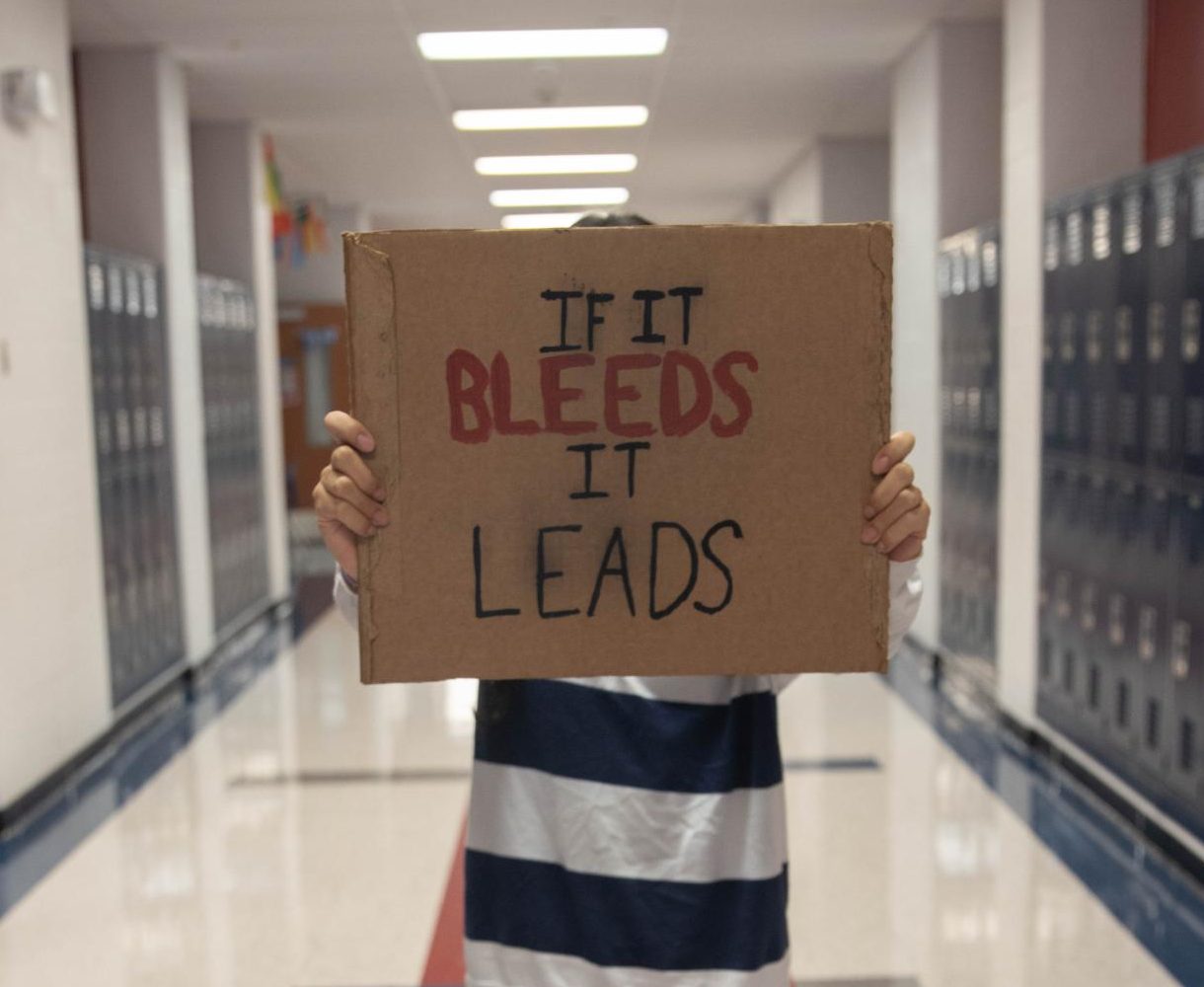

“If it bleeds, it leads” is a common saying among news outlets. It means that any topic involving violence, pain, or confusion, is going to capture the attention of readers. And, more likely, going to cause conflict and tension amongst the readers.
“Violence always draws attention, because it is the most immediate and obvious way to do so,” Lorelei Wise (12) said.
A prime example of this is the “Unite the Kingdom” rally, in the UK, that took place on Sept. 13 in honor of Charlie Kirk. More than 100,000 people gathered together, marching to honor Kirk, and to protest against immigration.
There was no ill intent with this rally initially, in fact the organizer of the event, Tommy Robinson, had posted on “X” asking attendees to avoid violence. His wish did not come true. Several protestors ended up turning to violence, attacking police officers who were attempting to separate them from a counterprotest.
A counterprotest that received substantially less coverage than the “Unite the Kingdom” rally. The reasoning that the opposing side received substantially less coverage, most likely, has to do with the lower attendance and non-violent nature of it.
Professional media outlets tend to have a pick-and-choose mindset, meaning that they will write and publish stories that they believe will draw attention to their website, even if the stories don’t convey both sides of the situation.
American news outlets tend to lean towards pick-and-choose coverage, picking to cover the more violent events, and painting them, in some instances, to be larger than they are.
“I feel like community is extremely crucial to help fight polarization, that we find in our country and the violence in our media,” Wise said.
In June of 2025, Los Angeles experienced the LA protests. The LA protests had no organization, or intention, and started unexpectedly after a Home Depot had been raided for undocumented immigrants. Following this raid, protests sparked against ICE and the National Guard across the city. This uproar caused protestors and police to clash.
Shortly after the unrest in LA, protests were sparked across the nation, most of which were peaceful, even St. Louis held one. The peaceful protests received little coverage, being overshadowed by larger, more violent ones, because, once again, “if it bleeds, it leads.”
But “bleeding” isn’t the answer. Violence isn’t the answer. The answer is simple; it’s community.
Where violence tears us apart, and creates pain and confusion, community builds hope. It builds empathy.
“Empathy doesn’t mean you’re against someone. It means you’re with people.” Navya Manchala (10) said.
Community is a hard thing to find in our society. With ever innovating technology and the polarized world we live in, it’s nearly impossible to understand others. To understand each other.
Social media and news outlets will never stop trying to convince us that others are different. And that those differences mean we can’t get along.
But they’re wrong.
We were made to connect with each other. Not to hurt each other, not to lie, not to fight, not to hate.
“Even though it might be rare to see people who have opinions you have, and it might seem like the entire world’s against you. It really helps to come together on an issue and talk about it,” Manchala said.
Take Nepal for example. After coming together to fight against corruption in their nation, Nepali youth overthrew their government. This new found camaraderie didn’t stop at changing their government, but continued on, with citizens helping to clean up the literal mess they made.
