
Skip to Content
Beauty standards are a constant presence. From how you see yourself, to how you see others, they affect everyone, and every aspect.
Ella Quinney

The Ultimate Deception: Beauty Standards

Beauty standards lurk in the shadows of society at all times, but it’s time to shed some more light on their impact.
Categories:
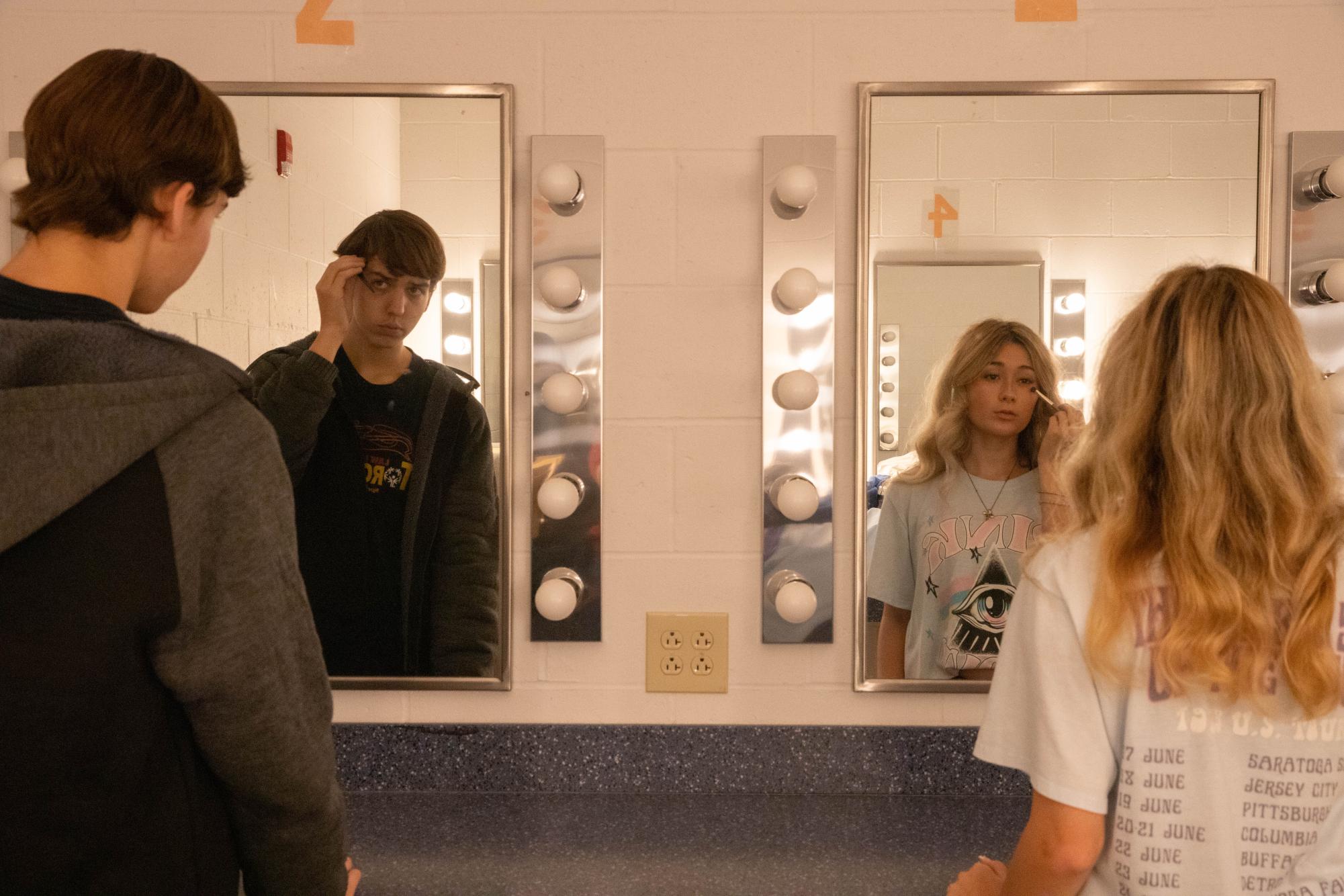
Beauty is a journey that is individualized. "You'll be able to accept yourself a lot better if you do whatever makes you feel beautiful," Kroehnke said.
A Shattered Mirror: the Effect of Female Beauty Standards

Every young woman faces a moment in their life where they feel like they are not enough. They look in a mirror and only see what they dislike. They see what others dislike. And, they see their flaws and imperfections; the things that make them human. 

The world we live in is riddled with the concept of the “ideal woman.” A woman who is skinny, but not a twig. Loyal, but not overprotective. Confident, but not overpowering. Kind, but not a pushover. She’s perfect. Perfect looks. Perfect behavior. Perfect thoughts.

But, this “ideal woman” doesn’t exist. She’s a piece of fiction written by the world we live in. 

“Even lines in movies have shaped and shown how women are supposed to view their bodies,” Sophie Pena (11) said. 

Beauty standards influence how we view characters, like Penelope from Bridgerton being considered unattractive. Or, they give us the classic 2000’s romcom scenario, where the writers want you to believe Anne Hathaway is ugly with glasses. As a result, it’s hard for young girls to ever truly feel accepted for themselves.

“If a guy sees a girl, and there’s a certain physical feature, hair color, or eye color–or she doesn’t dress a certain way…He doesn’t want to be around her,” Kylie Smith (9) said. 

“The Summer I Turned Pretty” is a perfect example of this. Belly went unnoticed by boys her whole life, until she had a glow up. After removing her glasses and changing her style, she is suddenly the center of every guy’s attention. While attention from guys may not have been her reason for changing herself, the scenario teaches girls that they have to change themselves in order to be seen by men, which is a toxic lesson that the media loves to push onto girls. 

“Influncers post stuff, and people see them and think, ‘she’s so pretty; I want to be like her,’ and then they start changing their style to become more like that influencer,” Maelyn Sachak (9) said.

Influencers bombard girls with “glow ups” and “get ready with me” videos on their feeds. 

“You see other girls and you think, ‘I’m not as pretty as them. I’m going to make sure I try and be as pretty as them,’” Kayla Kroehnke (12) said.

“Everything that girls see and the influencers they follow, or whatever they tend to follow, creates an expectation to look like those women, and to look up to those women,” Pena said.

This “expectation” doesn’t only create a preconceived perception of how women are ‘supposed’ to look, but it also impacts girls’ mental health. 

When we don’t see our moles, bunions, tooth gaps, back rolls on any magazine, we feel like ‘is this okay? Is it okay that I look different from everyone else?’ and then we start to feel things like shame. The shame gets turned on ourselves, then on other people, and the cycle continues,” Leah Dudley (12) said.

But how can this “cycle” be broken? 

“Do whatever you like to feel beautiful,” Kroehnke said.

Beauty isn’t concrete. It’s not one body type, or hair color, or style. It’s flexible. It’s personal. It’s unique to you. 

“No matter what you look like, no matter if you fit in, you are beautiful,” Pena said.

“You’ll be able to accept yourself a lot better if you do whatever makes you feel beautiful,” Kroehnke said.

“There is no ugly. There is no beautiful. There’s just us. And that’s all that it is,” Smith said.

Beauty is a journey that is individualized. “You’ll be able to accept yourself a lot better if you do whatever makes you feel beautiful,” Kroehnke said. (Ella Quinney)
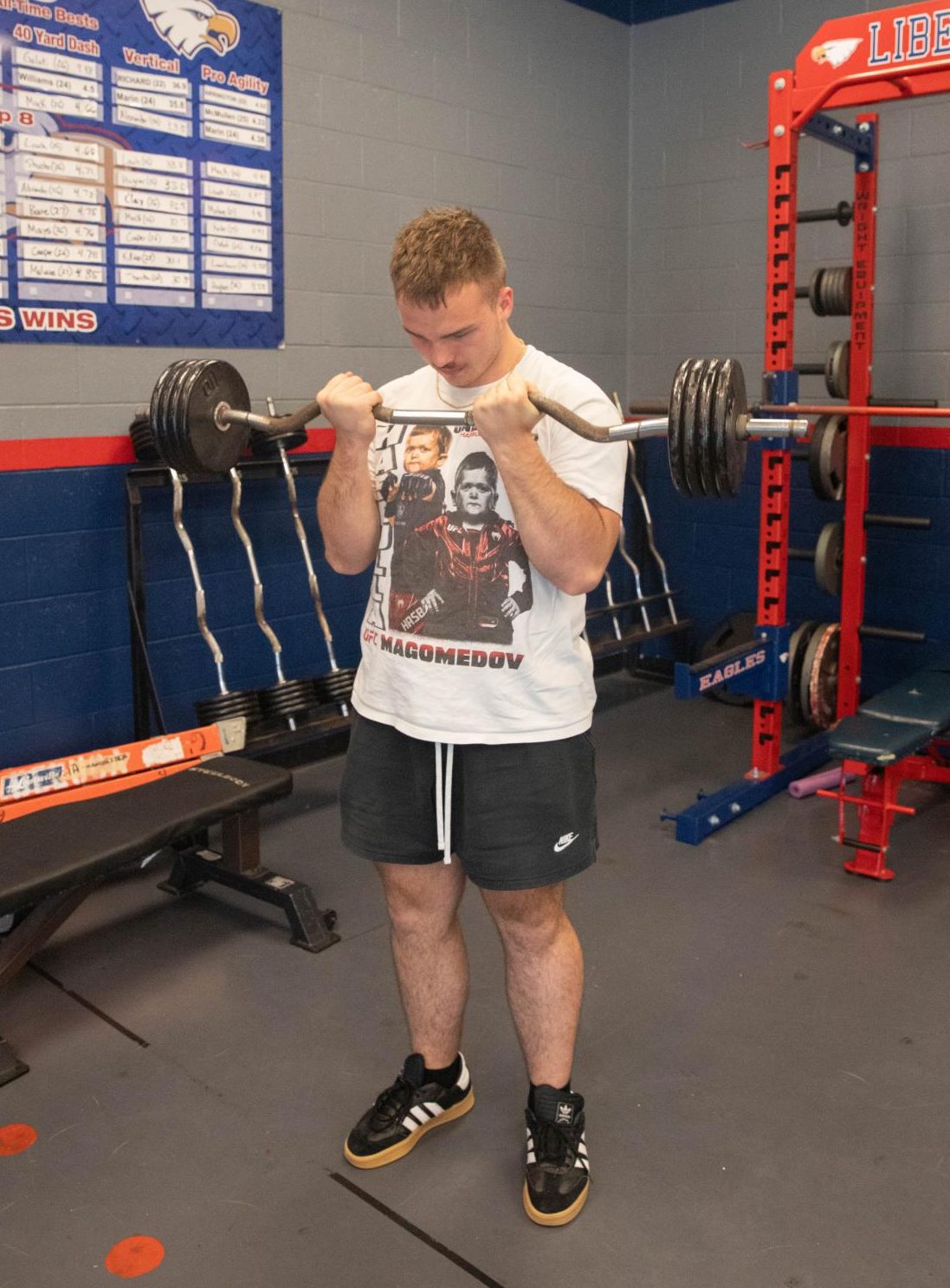
Working out is not about following a trend or matching an aesthetic. "Working out and being fit is extremely connected to mental health," Pais said
An Invisible Weight: the Effect of Male Beauty Standards

It’s what stares you in the face, and it’s what slips past your eyes. They’re loud, quiet, obvious, and invisible all at once. Welcome to the reality of men’s beauty standards–the ultimate paradox. 

Even when one isn’t actively looking for the “ideal man,” the popular belief of what is considered good-looking is inescapable. From Chris Hemsworth in “Thor” to Michael B. Jordan in “Creed,” the standards set for men’s beauty are everywhere, whether we like it or not.

“They come from movies and go to social media in a pipeline,” Kallen Stromlund (9) said.

With these standards, perfection is not a concept, it’s an expectation: the perfect body, the perfect hair, the perfect man. 

More accurately, the perfect illusion. 

Advertisements and popular culture only feed the relentless fire of beauty standards, as society is reminded of what “should” be considered beautiful everywhere they go. 

“Advertisements and marketing push beauty standards a lot, and it applies to how beauty standards are taught and learned,” Emory Pais (12) said. “Even a pop-up ad or an ad on YouTube TV can be where they come from.” Whether it’s seeing perfected Calvin Klein advertisements or hair supplements that men apparently need to be able to retain confidence, beauty standards underscore a large part of consumed content. 

Past this, when entertainment sticks to the mold of conditional beauty, it’s even more difficult to avoid compartmentalizing male features that society has considered optimal. 

“People usually fantasize about looking like certain male actors,” Pais said. The influence of male portrayals of what it means to be the main character combined with social media accounts further influence people into believing dictated standards at all times. 

“For many actresses and actors, they’re either losing so much weight or putting on all of this muscle, and they’re not doing it healthily. But, people are seeing these influencers as role models,” Archer said. 

With beauty standards being ingrained into society and perceptions, they are invisible forces that lurk behind men’s outward presentation. As a result, the physical and mental health of many have been harmed. With men being instructed to change their bodies in mere months, for instance, they are put under strain while moving on an unsustainable, stressful path. 

“It can feel like you have to live up to a certain standard,” Raven Steinbruegge (12) said.

More often than not, the price to pay for “perfection” is not only costly, but it is also not displayed, for male beauty standards are more internalized than we may realize.

“Guys are most often taught that they need to do better and build themselves up,” Tabers said. “While that’s not necessarily bad, if it’s taken too far it can be detrimental.”

With the detrimental effects of beauty standards affecting people across the globe, how does anyone win when surrounded by such diverse opinions? The answer lies in understanding that beauty is subjective.

“Beauty is not a look; it’s a lifestyle. It’s how you act, and it’s who you are,” Archer said. “You don’t have to fit a standard or be all strong. Every single body is beautiful.”

It’s unlikely that beauty standards will fade from society. Nonetheless, rather than perpetuating the opinions that thrive on shame or insecurity, there are steps that can be taken to teach men an important mindset: acceptance. Acceptance of others, and–most importantly–acceptance of themselves.

Working out is not about following a trend or matching an aesthetic. “Working out and being fit is extremely connected to mental health,” Pais said (Ella Quinney)
Check out our podcast, Deep Dive Discussions, where we talk about our personal experinces with beauty standards.
Donate to LHStoday
$235
$500
Contributed
Our Goal

Your donation will support the student journalists of Liberty High School. For the 2025-26 school year, we are trying to purchase additional cameras and video equipment for our growing media program. We also plan to attend the national journalism conference in Orlando in November 2026.

About the Contributors
Ella Quinney
Ella Quinney, Editor-in-Chief of The Ledger
Ella Quinney is a senior, this is her fourth year in Publications. Quinney is Co-Editor-in-Chief of the Ledger magazine, along with a reporter for the website. She can’t wait to work alongside her staff to produce the magazine, and work on the website this year. Outside of Publications, she is Key Club’s editor and a member of DECA. Quinney bakes, reads, and hangs out with her friends in her free time. She is looking forward to a great last year, in and out of the classroom.

Loukya Vaka
Loukya Vaka, Copy Editor of The Ledger
Loukya Vaka is a senior, and this is her fourth year in Publications. Vaka is Copy Editor of the “Ledger” magazine, and this is her second year in this position. Outside of Journalism, Vaka is the president of Key Club, president of HOSA, treasurer of Books2Brand, and treasurer of NHS. She is also a part of LeaderinMe, Model UN, Students Demand Action, and Spanish Club. Vaka enjoys playing the piano and the flute, reading, listening to music, and spending time with her loved ones. In the future, she plans to study medicine and become a family doctor. She is excited to put out some amazing “Ledger” issues and for this amazing new year.
Donate to LHStoday
$235
$500
Contributed
Our Goal