


For 76 years now, betting on sports has been a habit of the American people. From all the different types of betting for different sports, one type has always upheld the trophy in the most used way of sports betting.
From 1949-1992, sports betting became a widely used way of fans making money on sports and teams that they love. However, on Oct. 28, 1992 former President George H.W. Bush signed the Professional and Amatuer Sports Protection Act (PASPA) which prohibited states from authorizing sports betting.
In May of 2018, the U.S. Supreme Court ruled against the Professional and Amateur Sports Protection Act which gave states the legal right to authorize online sports betting in the state. Right after this act was shot down by the court, states around the country began legalizing online sports betting to their citizens, starting with Delaware.
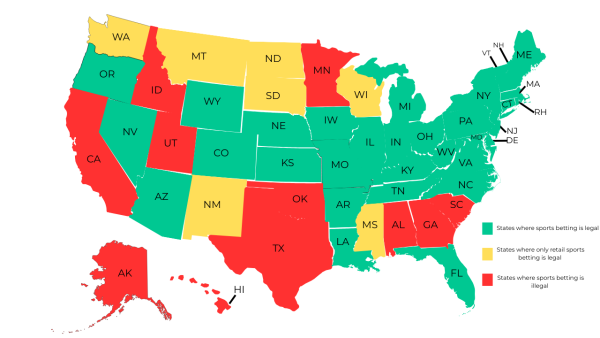
Since the law was passed to authorize online sports betting, 39 states have legalized online sports betting as of Dec. 2025, with Missouri being the most recent one added to the list. For seven years now, Missouri has held multiple votes, meetings, and bills, to try and legalize online sports betting. In Nov. of 2024 Amendment 2 was passed in Missouri which would legalize online sports betting in the state starting on Dec. 1, 2025.
For a full year, Missouri residents were waiting until this day so they could start making money from betting on sports, teams, and players, that they love and support. That day has now come and there are many mixed emotions and thoughts about this amendment with some people for and against online sports betting. One of the groups of people that it will affect, are the teachers and students in the Sports in Society classes around the state.
Online sports betting is a hot topic in Sports in Society classes, as it brings a unique change to some people thinking on sports.
Former Sports in Society teacher Ellie Ulsas has two sides of her thinking about the new law being passed.
“I’m a fan of sports betting, I understand people thinking that it’s gonna sway how teams do and stuff and politics behind how teams perform,” Ulsas said. “But personally, I like it because I feel like it brings a lot more attention to sports, and gets people involved in sports that maybe weren’t interested in sports before.”
The legalization of online sports betting has brought mixed emotions from people all over the state with some people liking and it some disliking it. While there are many different apps that allow you to bet with, such as DraftKings, Bet MGM, Fanduel, are some of the most popular ones.
Social Studies teacher and current Sports in Society teacher, Macklin Parks also has mixed emotions about this newly passed law.
“I think it could make people not use it responsibly, some people get addicted to betting and gambling very easily,” Parks said. “It could just kind of be a gateway and hurt some people in the long run.”
Ulsas also agrees online betting can be dangerous.
“The downside to betting is that people don’t always handle their finances responsibly, so I could see it maybe hurting some people financially now that it’s legal,” she said.
A certain part of this new law has it’s upside and it’s downside; whenever a bet gets placed and winnings are received by the user, a certain percentage of the winnings will be taxed. The percentage of tax that is taken out is based on how much the winnings are, the higher the winnings, the more that will be taxed. The upside however is that the tax money that gets taken from the winnings, will be used towards funding public agencies such as the schools.