

In modern day, it seems people rely more on trying to prove others wrong than painting a convincing argument. The old age tradition of debate sometimes no longer holds the same weight in modern conversation. However, in terms of fruitful discussion, the legacy of local T.V. talk show “Donnybrook” still remains going strong for more than three decades.
The local PBS program is a weekly show with quick-witted debate. All five journalists that represent multiple mediums across the St. Louis area (Alvin Reid, Bill McClellan, Charlie Brennan, Wendy Wiese, Joe Holleman and Sarah Fenske) on the show are opinionated but respectfully argumentative, and today it’s one of the last polite debate shows left.
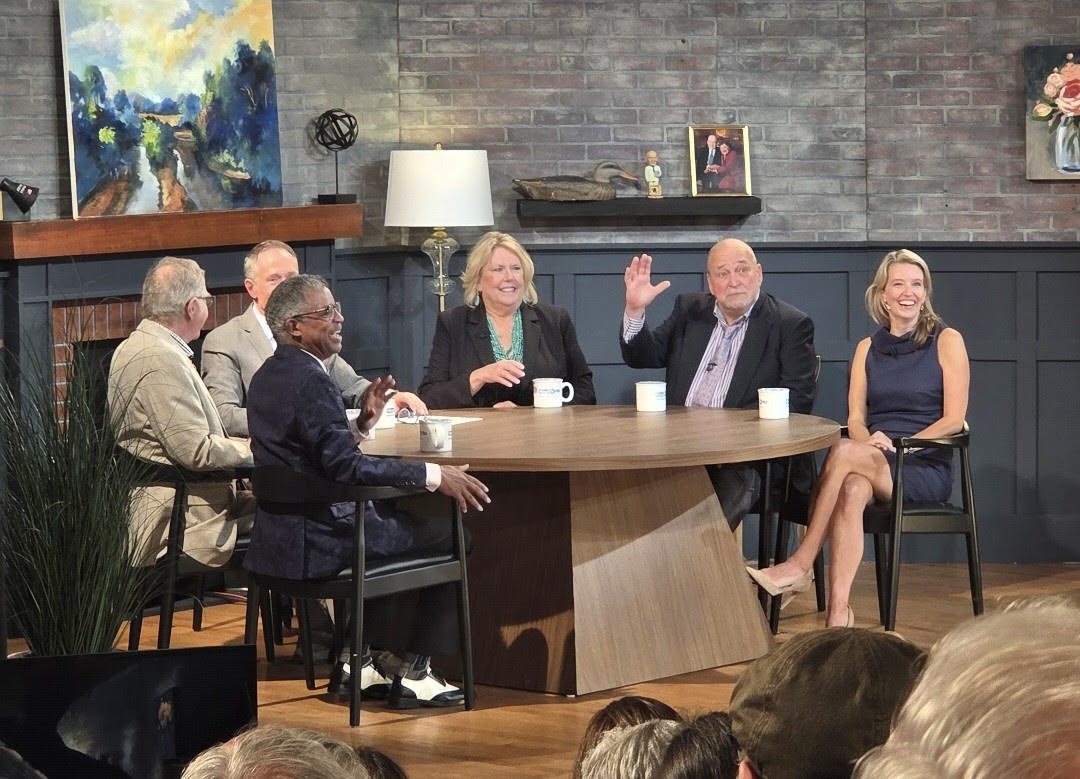
Annually, “Donnybrook” hosts a live event called “Donnybash.” The event is structured normally, with topics being written on a paper that the journalists discuss. The only thing that’s different is at the end instead of call in questions, there are live audience questions instead. The most recent “Donnybash” was April 16 at the Sheldon Concert Hall in St. Louis. The hosts discussed local issues focused on the St. Louis metropolitan area such as the development of data centers, a tie in a city council race and traffic concerns in St. Louis city.
This event builds the community of viewers and members alike, where they can interact with each other in person. Not only does it build community, it gives viewers a chance to talk to the journalists in person.
The unrecognized effect of “Donnybrook” is the influence it has on the future of journalism. With everything going on politically in the world, the art of conversation and civil debate is lost with few exceptions. “Donnybrook,” being one of those exceptions, shows that politics doesn’t have to ruin opinionated journalism.
“The world needs journalists,” Alvin Reid, a host of “Donnybrook,” states, who himself is a journalist at the “St. Louis American.” “The importance of modern day journalism, especially in politics, is crucial. Reporting is the only way you can find the truth and tell the full story. “And you have to ask them questions. And then you go back, and you write a story, and you tell their story,” Reid continues.
“Donnybrook” has an exceptional place with talk-show debate about topics that concern local residents. Unlike other channels, discourse on the show is structured like long-time friends having a normal conversation around any topic under the sun. The program sets the precedent of fun, light-hearted banter that anyone can enjoy.
Most times, the St. Louis journalists tackle serious problems with recent news in a less-serious way. Their individual takes shed different lights on each subject and other than being entertaining, viewers can form their own opinions based off of the beliefs of each host in relation to that subject.
In terms of reporting and on-field journalism, each journalist on “Donnybrook” has a legacy there outside of the show. Many of the journalists have something to say about their careers as reporters.
“What I really feel like I am, more than anything else, is a storyteller,” longtime St. Louis Post-Dispatch columnist Bill McClellan said, who has been part of the cast when the show originally started 35 years ago. “Like, the columns that I like best are the ones where I’m telling a story about somebody else.”
Today, shows like “Donnybrook” are needed in local journalism, where discourse is not dramatized or superficial like it is on many other channels.
In modern day, it seems people rely more on trying to prove others wrong than painting a convincing argument. The old age tradition of debate sometimes no longer holds the same weight in modern conversation. However, in terms of fruitful discussion, the legacy of local T.V. talk show “Donnybrook” still remains going strong for more than three decades.
The local PBS program is a weekly show with quick-witted debate. All five journalists that represent multiple mediums across the St. Louis area (Alvin Reid, Bill McClellan, Charlie Brennan, Wendy Wiese, Joe Holleman and Sarah Fenske) on the show are opinionated but respectfully argumentative, and today it’s one of the last polite debate shows left.
Annually, “Donnybrook” hosts a live event called “Donnybash.” The event is structured normally, with topics being written on a paper that the journalists discuss. The only thing that’s different is at the end instead of call in questions, there are live audience questions instead. The most recent “Donnybash” was April 16 at the Sheldon Concert Hall in St. Louis.
This event builds the community of viewers and members alike, where they can interact with each other in person. Not only does it build community, it gives viewers a chance to talk to the journalists in person.
The unrecognized effect of “Donnybrook” is the influence it has on the future of journalism. With everything going on politically in the world, the art of conversation and civil debate is lost with few exceptions. “Donnybrook,” being one of those exceptions, shows that politics doesn’t have to ruin opinionated journalism.
“The world needs journalists,” Alvin Reid, a host of “Donnybrook,” states, who himself is a journalist at the “St. Louis American.” “The importance of modern day journalism, especially in politics, is crucial. Reporting is the only way you can find the truth and tell the full story. “And you have to ask them questions. And then you go back, and you write a story, and you tell their story,” Reid continues.
“Donnybrook” has an exceptional place with talk-show debate about topics that concern local residents. Unlike other channels, discourse on the show is structured like long-time friends having a normal conversation around any topic under the sun. The program sets the precedent of fun, light-hearted banter that anyone can enjoy.
Most times, the St. Louis journalists tackle serious problems with recent news in a less-serious way. Their individual takes shed different lights on each subject and other than being entertaining, viewers can form their own opinions based off of the beliefs of each host in relation to that subject.
In terms of reporting and on-field journalism, each journalist on “Donnybrook” has a legacy there outside of the show. Many of the journalists have something to say about their careers as reporters.
“What I really feel like I am, more than anything else, is a storyteller,” longtime St. Louis Post-Dispatch columnist Bill McClellan said, who has been part of the cast when the show originally started 35 years ago. “Like, the columns that I like best are the ones where I’m telling a story about somebody else.”
Today, shows like “Donnybrook” are needed in local journalism, where discourse is not dramatized or superficial like it is on many other channels.