

Vaccines, reproductive health, mental health, nutrition, and more. What do these terms have in common? Controversial, yes. Divisive, most definitely. So, how do we make doctors understand, and how do we encourage patients to listen?
Perhaps, the first step is taking a glance at the other side.
For patients, finding the right medical professional is crucial. In some cases, patients are able to cultivate great relationships with doctors, and the positive effects are monumental.
“I think it’s easy to go to the doctor if I am having an issue,” Abby Chandonnet (12) said. “I think I have the connection with my doctor that I am able to talk to her about anything and she would be able to help me in any way she can.”
However, if patients feel distrustful because of their past experiences, from being pressured towards only one option to being left unheard and alone in a difficult environment, trust can be hard to rebuild.
On the other hand, medical professionals may feel limited in their ability because of patients’ predetermined notions of what they believe to be best. After all, once one’s mind is made up, it becomes difficult to bring in new angles.
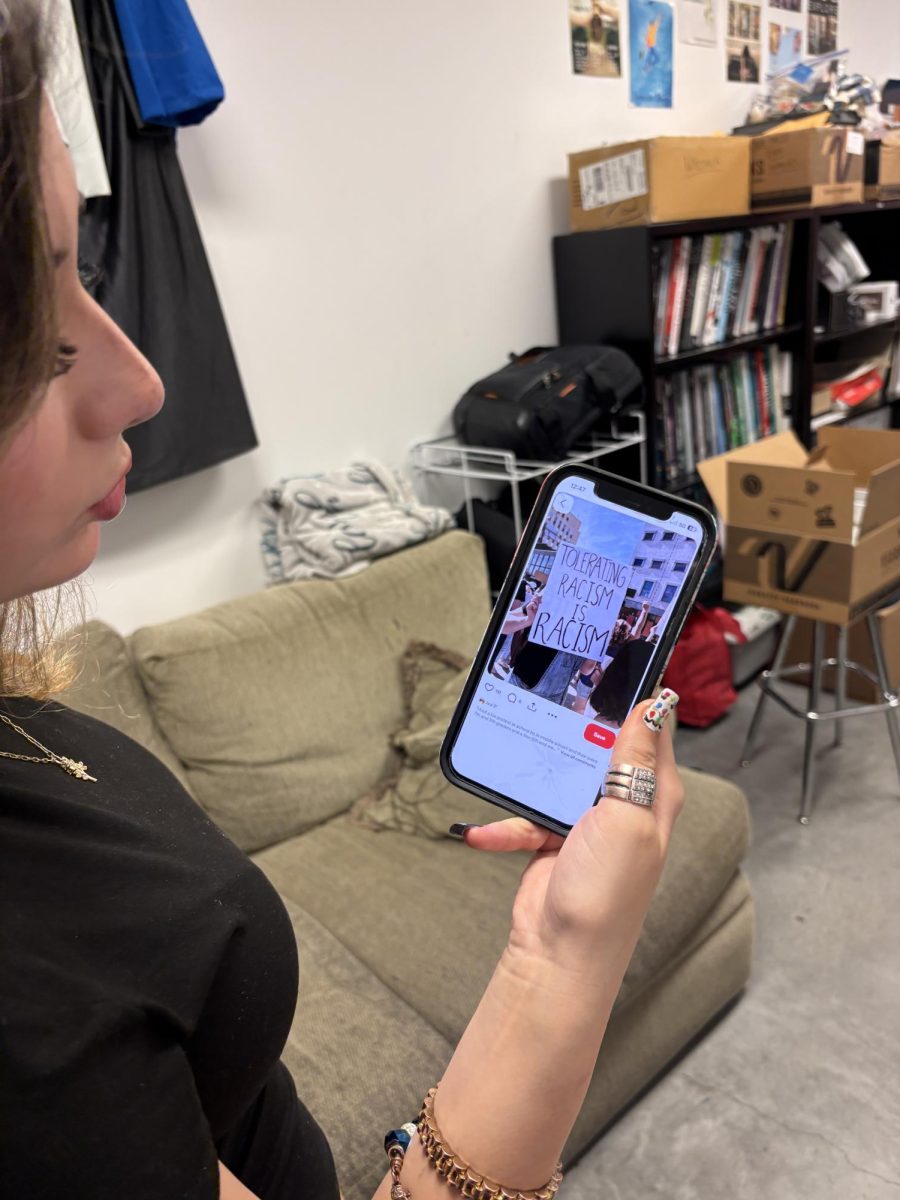
“Overall, I think the medical field is very trustworthy, but I feel—espeically in the age of social media—there are more opinions out there, and a lot of misinformation goes out that people take as factual. That ends up harming that relationship and trusting medical professionals,” Melissa Simms, school nurse, said. “You’re trusting the people that are just posting online based on maybe individual, one-off experiences that are valid concerns but shouldn’t necessarily override well-thought-out information.”
Now, there are few things that can easily be established: healthcare breeds moments of strong emotions and opinions alike. A little harder to understand is the solution to the overarching question: in this environment, how do we create trust?
A possible solution: a conversation.
The answer seems simple, almost too idealistic. Yet, the issue begins with considering what we define as a proper conversation? After all, a conversation is not trying to get the last word—it’s reaching out with a hand to understand the other person’s heart. A conversation is not an argument or debate—it’s a chance to hear from the other perspective. And, a conversation is not simply looking for the perfect answer. A conversation, a real connection, is placing biases at the door, no matter how difficult that may be, and honestly appreciating all options as a united front, not a divided one.
“These doctors and nurses take the time to go through the schooling to understand how the human body and everything works,” Chandonnet said.