


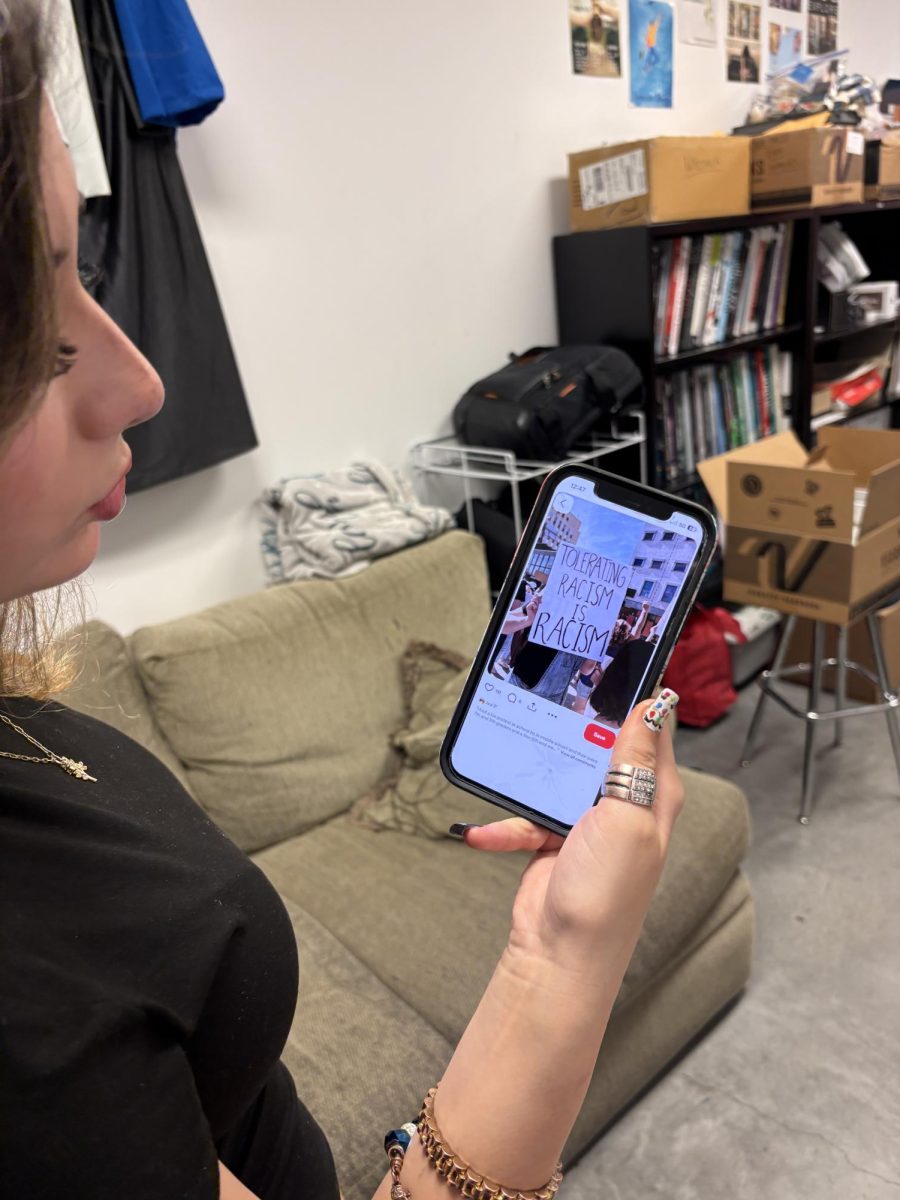
Since July 2, 1964, segregation in America has been abolished. And since then, there have been laws made to prevent racial discrimination. But similar to other crimes, racism did not end with the law.
From that day, bigotry, racial prejudice, and white supremacy have remained profound issues in America–though it may not be emphasized as an actual problem. As racism lived on, it never “went away,” but instead became more generalized.
With that being said, there seems to be a specific concern for racial discrimination in American high schools. One study from 2026 shows that 1 in 3 students of color have reported racism in high schools across America. For the majority, that is more than 50% of the non-white demographic of students.
One student here at Liberty, Anthony Camaano (10), considers himself to be surrounded by loving friends. Luckily, he hasn’t experienced a lot of racism. That being said, he shares his thoughts on how stereotyping affects him when it happens.
“Me and my friends like to play soccer and we were out on the field. Some kids yelled, ’Oh of course, the Mexicans are playing soccer!’ Not a lot of people are racist to offend, just to kinda joke around. It sucks,” Camaano says. What might seem like harmless fun, or “teenagers being teenagers,” is really more serious than just that.
A prime example of common legitimized racism is when people defend an intolerantly racist younger person who was called out by saying things like “they were young they didn’t know,” yet racism is not something people are born with, it’s not a human trait. It is something that is taught. When you continue to make excuses for blatant racial discrimination, you are ratifying the fact that someone was racist. No matter their age, race, eye color, anything, racism will never be okay.
Another student, Esther Mireles (11) reports her experience with discriminatory jokes from her friends, and how it makes her feel when she talks about her home life.
“You’re not going to make me feel stupid for my culture, how I was raised, because my parents are immigrants,” Mireles said. “My friends make jokes like ‘oh, what if you get taken’, but I was literally born in Wisconsin.”
It goes to show how common racial jokes have become when students experience stereotyping from friends. People need to not treat other people based on stereotypes, and just be able to not see someone for their race, but just see a human. Treat people like people.
When a golden retriever meets a poodle, it’s not going to treat the other differently because they look different from one another. They are able to recognize another dog and run alongside each other. Even humans can’t get that right, aren’t we supposed to be more advanced than dogs?
Whether you see it or not, whether you choose to ignore it or not, racism is actively present in high schools across America, affecting 1 in every 3 students of color each day. Racism will never be a joke, a charity case, or a minor issue in society. And if we continue to let the relevancy of this issue fade, we are only regressing as a society.