


As the influencer pats on her blush, she explains to viewers how the victim left their home that night. The beauty guru then brushes on mascara, and reflects on the number of stab wounds they received. When she finally applies her setting spray, finishing her makeup look, she comments on the devastation felt by their family.
As the 2010s came to a close, a peculiar genre began to top the charts in America. Edison Research Center found that, as of 2024, 84% of Americans had consumed some form of true crime media.
“I think people are interested in serial killers because they show the extreme of humanity and the depravity that people can go to,” Louis Stoyanov (12) said.
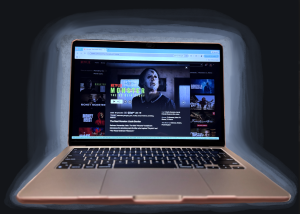
This morbid fascination plaguing the minds of Americans has since been manipulated by the film industry. TV shows like Netflix’s “Monster,” which is composed of three seasons, each portraying a different murderer, have begun to receive massive amounts of attention.
These true crime shows and podcasts have facilitated the creation of videos like true crime “get ready with me’s,” which involve influencers applying their makeup while they analyze specific cases.
But, what is the problem with these shows and this genre of videos? Why do directors and influencers come under such fire for the publication of these stories?
The issue lies in the heart of the creators.
Directors have adopted the habit of casting popular and attractive actors to play disgustingly violent serial killers. Americans are not watching shows like “Monster” to learn; they are watching out of attraction. People are streaming to see Evan Peters or Charlie Hunnam. These shows are directly capitalizing off of murder by way of popular actors.
No attempts were made to contact the families of those murdered by Jeffrey Dahmer before the creation of the first season of “Monster.” Numerous aspects of Ed Gein’s life, including murders, were fabricated by “Monster” in its third season for the entertainment of viewers.
True crime storytellers often ignore pleas from victims’ families, who ask them not to discuss the intimate details of the murders. Influencers lack any respect or care as they chat about the real murders of innocent people, all while applying their makeup.
“It’s like a story time, but it’s not your story. It’s someone’s murder,” Stoyanov said. “At a certain point, you are kind of removing the gravity of the situation.”
True crime media, as a whole, displays an utter disrespect for victims, exploiting tragedies for views.
“I am disturbed by it,” Stoyanov said. “This is somebody’s life.”
Because of these creators, killers have been transformed into celebrities, while gruesome murders are exploited for engagement and views.