

Anyone who has made the mistake of bringing up politics at Thanksgiving dinner knows that disagreement isn’t always civil. It seems that these days, a difference in opinion is synonymous with an argument. It’s a natural reaction to defend one’s beliefs and ideas—especially with more serious topics—but it’s gotten to a point where even the smallest misunderstandings can turn into huge fights. One would be remiss to find someone who hasn’t been involved in a situation like this, where what seems like a small fight turns into something much more dramatic. Over the past 10 or so years, we—as a society—have undergone a shift in emotional regulation and reactions.
There’s this new mindset that every thought has to be a “hot take” or “unpopular opinion,” and because of that, we’ve lost the ability to compromise in all spaces—not just politics. From movies, to music, to fashion, many of the spaces in our lives have been overtaken by the constant need to debate, even over the simplest things.
Pew Research Center published the article “America is exceptional in the nature of its political divide,” in which they discussed the new link between identity and politics.
“… divisions between the two parties have intensified over time as various types of identities have become “stacked” on top of people’s partisan identities. Race, religion and ideology now align with partisan identity in ways that they often didn’t in eras when the two parties were relatively heterogeneous coalitions.” The merging of personal and partisan identities has led to an extremely argumentative society.
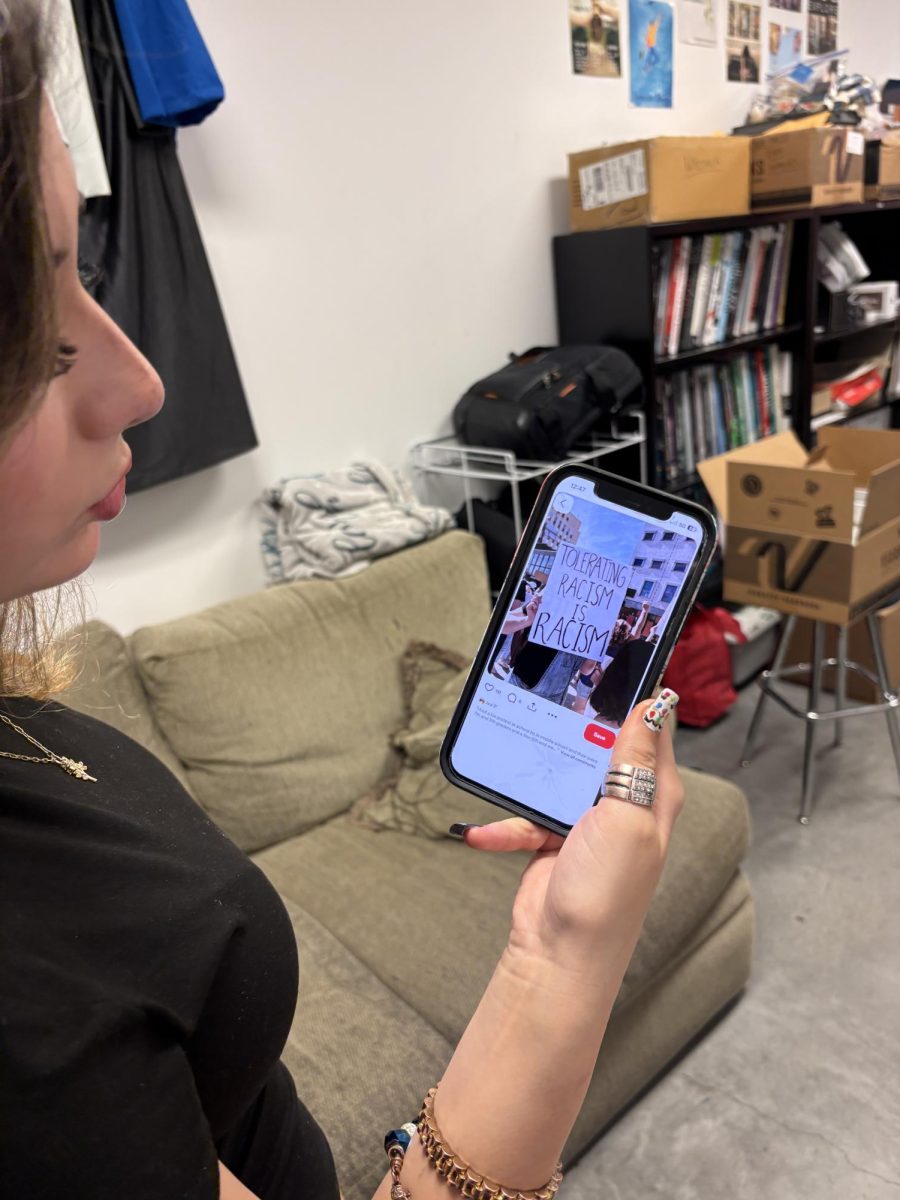
The recent divisiveness in America wouldn’t be possible without another newfound issue: the instant circulation of opinions via the internet. For the first time in human history, we know what everyone is thinking about any given topic. That—coupled with the deluded belief that one needs to share their every opinion with the whole world—has led to an entire online world that feeds on anger and conflict.
Unfortunately, problems from our online world don’t disappear when we close the tab or exit the app. That argumentative urge leeches into our real lives, which leads to weak and tense relationships.
According to Psychology Today, “Continuous conflict about anything, including political views, can lead to stress, resentment, and a feeling of being unheard or unvalued in the relationship.” Over time, these negative feelings can chip away at even the strongest relationships.
The only way to solve this problem is to truly listen to people, not just hear them. We need to listen to understand, not only to respond. Every media source we’re exposed to thrives off of argument and anger, so we need to focus on facts instead of sensationalized headlines. Only then will we be able to rediscover civility.